Slow Roads, Deep Roots: My Journey To Sustainable Travel
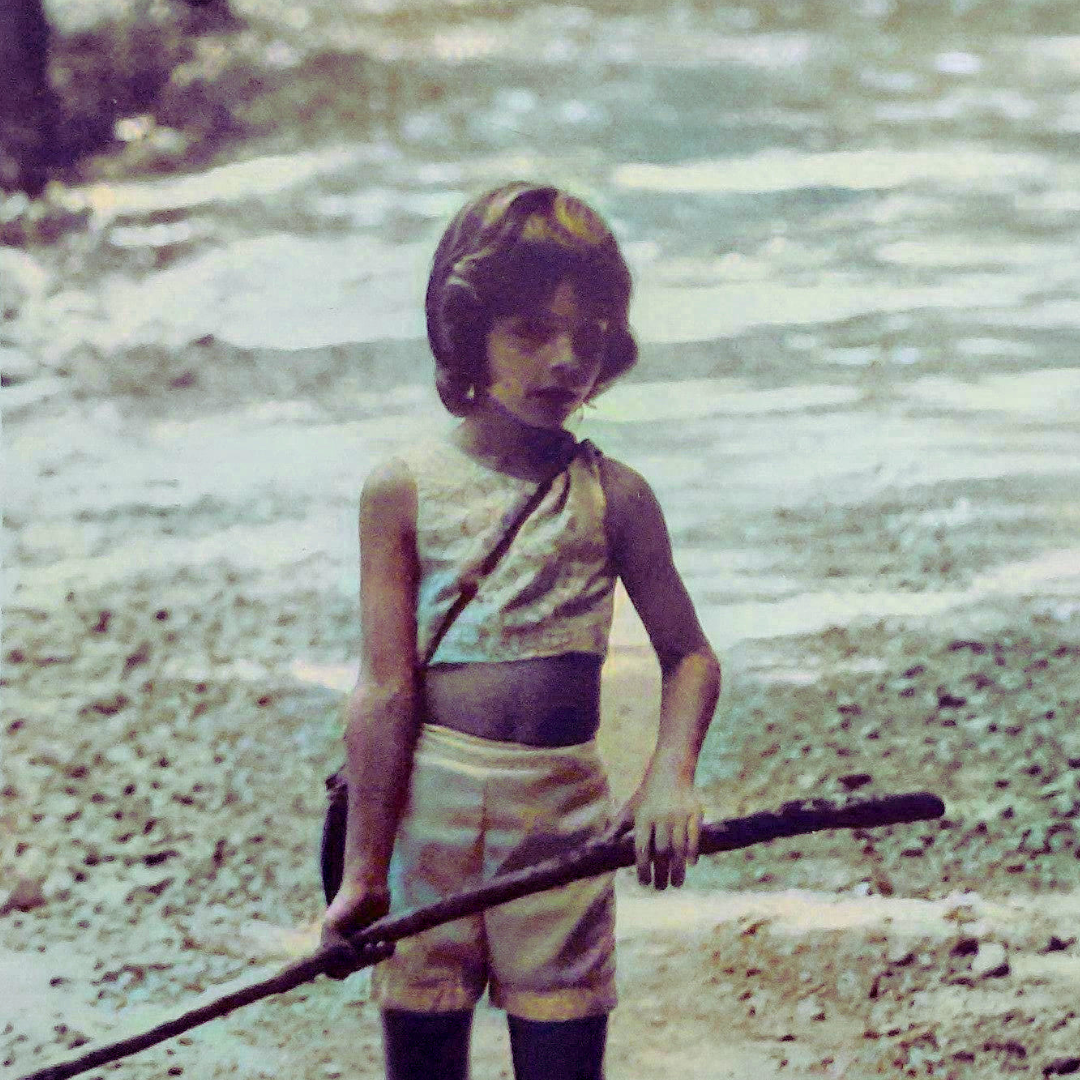
My first vacation was to a valley tucked between the ancient Appalachia mountains. For two weeks, I lived and slept under the wise canopy of northern red and chestnut oaks, old tulip, and black cherry trees.
I can still remember how the damp smell of fallen leaves on the dirt floor enveloped the entire campground. How cozy and protective the camper was against the rain outside.
At six years old, I was beginning to learn how seemingly small things can have lasting impacts. So, thankfully, I had no influence on my family’s vacation destination decisions.
As a very young blue-collar family, our single-income budget dictated the extravagance of our vacations. We couldn’t afford Disneyland or Europe, and flying was out of the question.
Such constraints, however, allowed us to take the road toward memorable intergenerational experiences.
In the foggy dew of an early summer morning, my parents loaded me and my little sister, still in our jammies, into our white Chevelle for the 300-mile road trip to Holly River State Park. We had all the comforts that analog kids needed - pillows and blankets, travel bingo cards, books, paper dolls, and snacks.
Hitched to the back of the car was a Starcraft popup camper—a hand-me-down gift from Dad’s folks. Tethered to the back of the popup were our bikes: my parents’ tandem, one with training wheels for my sister, and my prized banana seat bike.
Keeping an eye on the entire jalopy, my grandparents pulled up the rear of our mini caravan in a big blue Oldsmobile that moved as slowly as Grandad did.
Because we traveled during Dad’s time off work due to General Motors’ annual shutdown, we had ample time to explore the area at an easy relaxed pace.
Some days were spent hiking to the top of the smaller mountains and back down again, stopping for lunch and to bask in the beauty of the waterfall…
…or taking Square Dance lessons in the community shelter; or simply playing cards and watching the logs burn in the firepit.
When the urge struck, we’d follow the long and winding country roads a little further south to ride the Cass Scenic Railroad train or to Helvetia for a traditional Swiss restaurant meal.
We’d frequently visit local folks that my grandparents had gotten friendly with over their decades of camping. One was a Holly River park ranger and his daughter, who’d welcome us into their home for refreshments and conversation. Or we’d stop at the legendary Balli sisters’ farmhouse to purchase homemade cheese and buttermilk.
During one of these outings, the radiator in Grandad’s Oldsmobile overheated as we were cruising along on a deserted gravel and dirt road. We had just passed a creek, and conveniently littered nearby was a plastic container. Using ingenuity and improvisation to make a water funnel, we were soon on the road again.
Tucked deep within the Appalachian Mountains of Central West Virginia, Holly River State Park is surrounded by more than 8,000 acres of dense forest. Trees towering up to 2,600 feet stand guard over the diverse riches of flora and fauna. Meandering its way through the valley is Laurel Fork River, a tributary to the Cheat, Monongahela, and Ohio Rivers.
Much of Appalachia is a temperate rainforest, so campers experienced with the terrain were prepared for a lot of rain. In my family, preparation is practically a birthright.
Except one particular year when there was an especially large deluge. My and my sister’s rain boots had unfortunately been left behind in Ohio. Family folklore has it that Dad drove all the way back home to fetch them just so that we could splash around in the puddles without soaking our tennies.
Another time, Mom and Grandma were fed up with it and packed up the cars to head home despite protests from the men.
Holly River is a designated wildlife refuge, more wild than tame.
Among the deer, raccoons, squirrels, snakes, and birds that campers shared space with were black bears.
The bears were known to regularly saunter down from the hills in search of a late-night meal, so keeping camp free of food trash was a high-priority task of diligence.
Just as important as keeping a bear-free campsite was staying on the marked trails.
One summer, my sister and our two cousins (then 11, 13, and 16) inadvertently found themselves deep in the wilderness the very day we arrived at camp. We were a generation of free-range kids, so when they announced their intended hike, the adults shooed them off on their journey with water canteens and instructions to stay on the trail.
That was early afternoon. Hours passed and they had still not returned. The birds went to sleep as the valley grew dim and then dark and they still weren’t back yet. Eventually, the mothers were crying as the fathers described the kids to park rangers.
It just so happened that a division of West Virginia National Guard members was training at Holly River that weekend. They acted quickly and set out on a search mission to find three urban kids from Ohio. Meanwhile, my sister and cousins glimpsed lights from a house in a nearby holler and were brought back to camp unscathed.
Those early excursions inspired my romantic notions of hitting the open road.
They influenced my taste for slow and authentic travel experiences.
And they impressed upon me the importance of acting in respect of the natural world.